

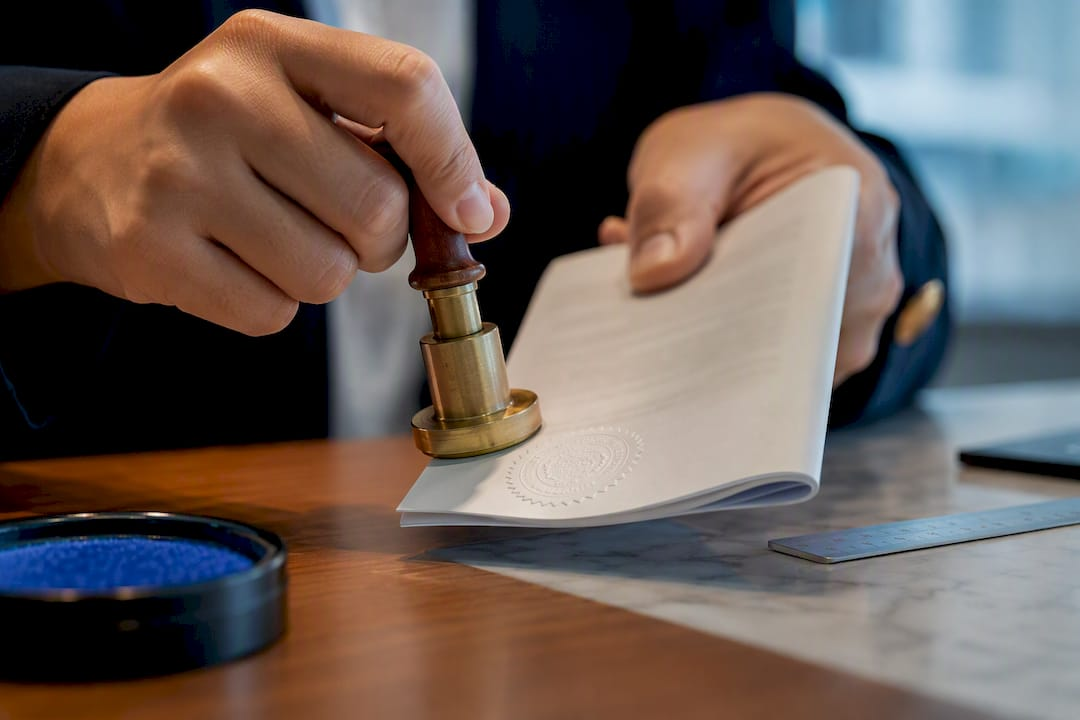
You get a certified copy of your LLC documents from the state office where you formed your LLC, usually called the Secretary of State or Division of Corporations. The fastest path is almost always searching that state’s online business database and ordering directly through the portal. Mail and in-person requests work too, just slower. Planning to use the copy overseas? Budget extra time for an apostille.
TL;DR:
- Most states charge between $5 and $30 for routine certified LLC copies, with expedited services costing significantly more depending on urgency.
- Processing times vary from same day or a few days for online orders to 10–15 business days for mail requests, making in-person pickup the fastest option.
- Foreign users must obtain an apostille after certification, which authenticates the signature for international acceptance, often requiring additional time and fees.
- Requests are frequently rejected due to name mismatches, missing or incorrect filing numbers, payment issues, or suspended LLC status, emphasizing the need for careful review.
- Managing multiple states or urgent international requirements often justifies using a professional service to handle filing, certification, and apostille procedures efficiently.
Table of Contents
- What Is a Certified Copy LLC Owners Actually Need?
- How Do You Request an Official Copy of LLC Documents?
- What Do Certified Copies Cost, and How Long Do They Take?
- Do You Need an Apostille to Use a Certified Copy Abroad?
- Why Do Certified Copy Requests Get Rejected?
- Where Do You Find Your State’s Certified Copy Instructions?
- Publisher Perspective: When a Full-Service Provider Actually Earns Its Fee
- How Myincteam Handles Certified Copies and Apostilles for You
- Sources
What Is a Certified Copy LLC Owners Actually Need?
A certified copy is your state’s official reproduction of a document you already filed, stamped with a seal or signature confirming it is genuine and on record. That attestation is what separates it from a plain printout: anyone can screenshot your Articles of Organization, but only the state can certify one.
Most requests cover a handful of document types:
- Articles of Organization or Certificate of Formation
- Amendments or restatements filed after formation
- Certificates of merger, conversion, or dissolution
You need one when a bank, lender, court, title company, or another state (for foreign qualification) demands proof straight from the source rather than your own files. Certified copies do not technically expire, but many institutions want a recently issued copy to confirm nothing has changed since, according to LegalClarity. That is a different animal from a certificate of good standing, which confirms your LLC is currently compliant rather than reproducing a specific filed document. If you are not sure which one a bank is actually asking for, our guide on maintaining LLC good standing breaks down the distinction.
How Do You Request an Official Copy of LLC Documents?
Every state runs this process a little differently, but the mechanics repeat closely enough that you can treat it as a template.
- Search the state’s business database using your exact legal entity name or, better, your entity/filing number. This confirms your record is active and gives you the identifiers you will need next.
- Gather your details: exact entity name as filed, document type, filing date, filing or document number, how many certified copies you need, and the mailing address for delivery.
- Choose your method. Online portals are usually fastest, often confirming your order immediately and shipping within days. States including New York publish both online and written request paths side by side.
- Submit and pay. Mail requests typically require a check or money order; Florida specifically requires payment in U.S. currency drawn on a U.S. bank, which trips up plenty of non-U.S. owners who try to send a foreign check, per the Division of Corporations.
- Ask about expedited service if you are on a deadline. Many states offer phone or in-person rush processing for an added fee.
Pro Tip: Always include your exact filing or registration number on the request. States match records by number far faster than by name, and a slightly mismatched entity name is one of the top reasons requests stall.
What Do Certified Copies Cost, and How Long Do They Take?
Fees vary by state and by how badly you need the document in a hurry. Routine certified copies generally run somewhere in the $5 to $30 range, though some states charge more for lengthier filings or multi-page amendments.
- Florida charges $30 for a certified copy of an LLC document.
- Illinois lists routine certified copies of Articles of Organization at $25, with an expedited fee around $75 for faster turnaround on qualifying documents.
- Washington’s example fee sits at $20 per certified copy.
Two states, two very different price tags for essentially the same document: Florida’s routine fee is $30 flat, while Illinois charges $25 for standard service and triples that to $75 to expedite.
Processing time tracks the method you choose. Online orders can clear same day to a few business days. Mail requests commonly take 10 to 15 business days, sometimes longer during peak filing seasons. In-person requests vary by office, but they are your best bet when you need something today and can show up with valid ID.
Do You Need an Apostille to Use a Certified Copy Abroad?
A certified copy proves your document is genuine within the United States. An apostille goes a step further, authenticating the state official’s signature so a foreign government under the Hague Convention will accept it without additional verification, according to Usa.
The sequence matters here, and getting it backward wastes time:
- Order and receive your certified copy from the state first.
- Submit that certified copy to the same state’s apostille unit, typically run out of the Secretary of State’s office.
- Do not send state-filed documents to the U.S. Department of State for authentication. That office handles federal documents, not state filings.
- Confirm the receiving country’s exact requirements before you start. Some accept apostilles on photocopies; others insist on the original certified seal.
Pro Tip: Before paying for a mailed physical certified copy, ask the receiving foreign authority whether they will accept a digitally signed or PDF certificate. Several states now issue those for select services, which can shave days off the timeline, per Washington’s Secretary of State.
Why Do Certified Copy Requests Get Rejected?
Most rejections trace back to a handful of preventable mistakes, and they are almost always avoidable with a quick double-check before you submit.
- Name mismatches. Your request must use the exact legal entity name on file, not a DBA or shortened version.
- Wrong or missing filing number. States use this number to pull records fast; without it, staff have to search manually and delays pile up.
- Payment problems. Foreign checks, cash sent by mail, or the wrong payment form are common reasons Florida and other states return requests, per the Division of Corporations.
- Suspended or dissolved entities. If your LLC has fallen out of compliance, the state may flag your record before issuing anything. Contact the office directly before ordering.
Pro Tip: Run a quick status check on your entity before submitting any request. A dissolved or administratively suspended LLC needs to be reinstated first, and our guide on reinstating a dissolved LLC walks through that process.
Where Do You Find Your State’s Certified Copy Instructions?
Every state publishes its own certified-copy page, and the details differ enough that a quick search saves real time.
- Florida runs a mail-in form with a flat $30 fee and strict U.S.-currency payment rules.
- New York offers both online requests and written instructions with a published fee schedule and expedited options.
- California uses its bizfileOnline system for most current requests and notices.
- Illinois publishes a clear fee schedule distinguishing routine from expedited certified copies.
- Washington allows electronic certificate delivery for some services alongside mailed physical copies.
Search “Secretary of State [state name] certified copy” or “certified copy Articles of Organization [state]” and stick to .gov results. Our breakdown of the Secretary of State’s role explains what these offices actually track and why they are the only valid source for certification. If you are managing entities across multiple states or juggling non-U.S. banking limitations, a registered agent or formation service can absorb the coordination work.
Publisher Perspective: When a Full-Service Provider Actually Earns Its Fee

Ordering one certified copy for one state is manageable solo. It gets messier fast when you are juggling multiple states, a tight apostille deadline, or a foreign bank account that cannot easily send a U.S.-drawn check. Those are the moments where a formation and compliance service stops being a convenience and starts being the difference between hitting a deadline and missing one.
Coordinating apostilles across state lines eats time few non-U.S. founders have to spare, and third-party services add real convenience at the cost of a service fee. The honest test: if you can wait 10 to 15 business days and pay by U.S. check, do it yourself. If you cannot, or if compliance gaps already exist, get help before the request bounces.
— Goga
How Myincteam Handles Certified Copies and Apostilles for You
Non-U.S. owners run into the same wall over and over: state offices want U.S.-drawn payments, tight document matching, and apostille steps that assume you already know the sequence. Certified-copy and apostille requests can be placed on your behalf, with status tracking and shipment to your international address.

If you are still setting up your LLC or need to get your compliance current before requesting documents, start with our US LLC formation service for non-residents. Our service includes handling filing details, the registered agent requirement, and ongoing paperwork to support your compliance process. Reach out through Myincteam to get a certified copy or apostille request moving today.
Sources
- Certified Copy – Division of Corporations
- LLC Request Form for Certificates of Good Standing and/or Certified Copies of Documents
- Certificates & Certified Copies | WA Secretary of State
- Copies of Corporation or Business Entity Documents | New York Department of State


