

Introduction
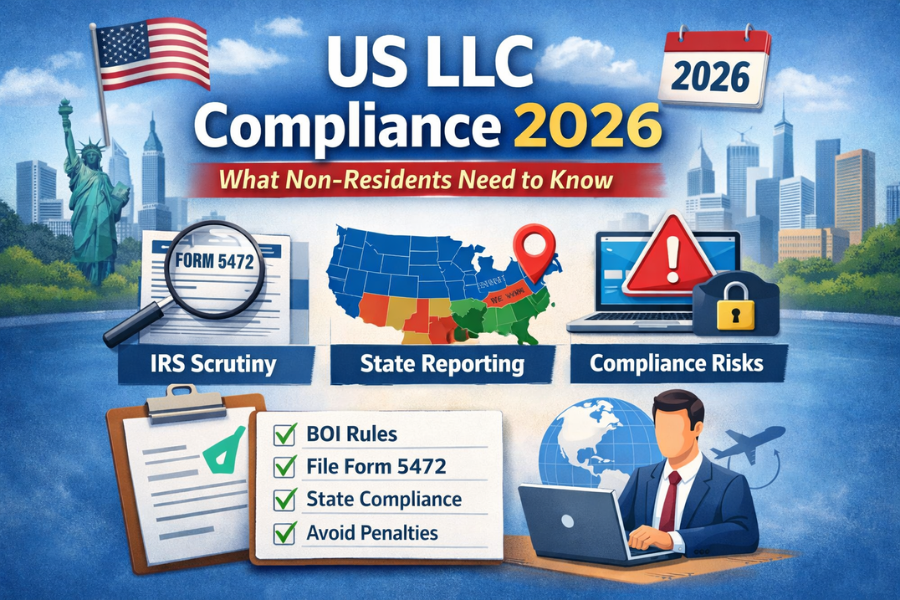
If you’re a non-resident running a U.S. LLC, 2026 brings important changes you cannot afford to ignore.
Between shifting BOI reporting rules, increased IRS scrutiny, and new state-level transparency laws, compliance is no longer just about filing once per year.
This guide breaks down what actually changed, what still matters, and where most founders get it wrong.
1. BOI Reporting: The Big Change Most Founders Misunderstand
One of the biggest updates comes from the Corporate Transparency Act (CTA) and FinCEN rules.
👉 As of 2026:
- U.S.-formed LLCs are exempt from federal BOI reporting
- This applies even if the owner is a non-resident
- Only foreign entities registered in the U.S. must file
This is a major shift, especially considering how confusing BOI requirements were in 2024–2025.
But here’s the catch 👇
State-Level Rules Are Emerging
Even though federal BOI reporting is paused or removed for U.S. LLCs:
- States like New York introduced their own transparency laws starting in 2026
- Other states are expected to follow
👉 Translation:
You might not file federally, but you may still need to report at the state level.
2. IRS Attention Is Increasing (Even for Small LLCs)
Many founders assume:
“I have no U.S. income – I don’t need to worry.”
That assumption is risky.
In 2026, the IRS focuses heavily on information reporting, not just taxes.
What Triggers IRS Attention
- Missing or incorrect Form 5472
- Mismatch between bank activity and filings
- Declaring “no activity” while still operating
- Repeated late filings
Even inactive LLCs can be reviewed if filings are unclear or inconsistent
👉 Key insight:
You don’t need to owe taxes to trigger an issue – you just need incomplete reporting.
3. Form 5472 Remains Critical (And Often Mishandled)
For foreign-owned single-member LLCs, Form 5472 + pro-forma 1120 is still mandatory.
Common mistakes include:
- Not filing because “no income”
- Reporting incomplete transactions
- Ignoring owner contributions or reimbursements
These are among the top audit triggers in 2026
👉 Important:
Even simple transactions between you and your LLC must be reported correctly.

4. The “Inactive LLC” Myth
Many founders believe they can keep an LLC open without compliance if they’re not using it.
That’s not how it works.
Even inactive LLCs may still need:
- Federal filings (Form 5472)
- State annual reports
- Registered agent maintenance
Failing to comply can lead to:
- Penalties
- Loss of good standing
- Administrative dissolution
5. The Rise of Automated Compliance Checks
In 2026, enforcement is becoming more data-driven.
The IRS now cross-checks:
- Bank data
- Payment processors
- State filings
This means:
👉 Even small inconsistencies are easier to detect
Automation is making compliance stricter – not looser.
6. Why Compliance Matters More Than Ever
A properly maintained U.S. LLC gives you:
- Access to Stripe, PayPal, and global clients
- Strong business credibility
- Legal separation of assets
But poor compliance can quickly reverse those benefits.
👉 Real risk:
Many founders don’t get fined immediately –
they get flagged later, when fixing problems is harder and more expensive.
7. 2026 Compliance Checklist for Non-Residents
Here’s what you should review right now:
✔ Confirm if BOI applies (federal vs state)
✔ File Form 5472 + 1120 correctly
✔ Keep transaction records clean and consistent
✔ Submit state annual reports on time
✔ Maintain a registered agent
✔ Avoid “no activity” claims without proof

Conclusion
2026 didn’t simplify compliance – it shifted it.
While federal BOI reporting has eased, new risks are emerging through:
- State-level laws
- Increased IRS monitoring
- Automated cross-checking systems
For non-resident founders, success is no longer just about forming an LLC.
👉 It’s about keeping it compliant year after year.


